
Guyana
Kaieteur Falls, Iwokrama Forest, Rupununi savannahs, Jaguars and giant river otters, Birdwatching, Community-run eco-lodges, Georgetown colonial architecture, Mashramani festival
Guyana sits on the north-east shoulder of South America, between Venezuela, Brazil and Suriname, and is the only country on the continent where English is the official language. Most of its people live along the Atlantic coast, leaving a vast interior of primary rainforest, rivers and open savannah that remains one of the least disturbed wild places in the Americas.
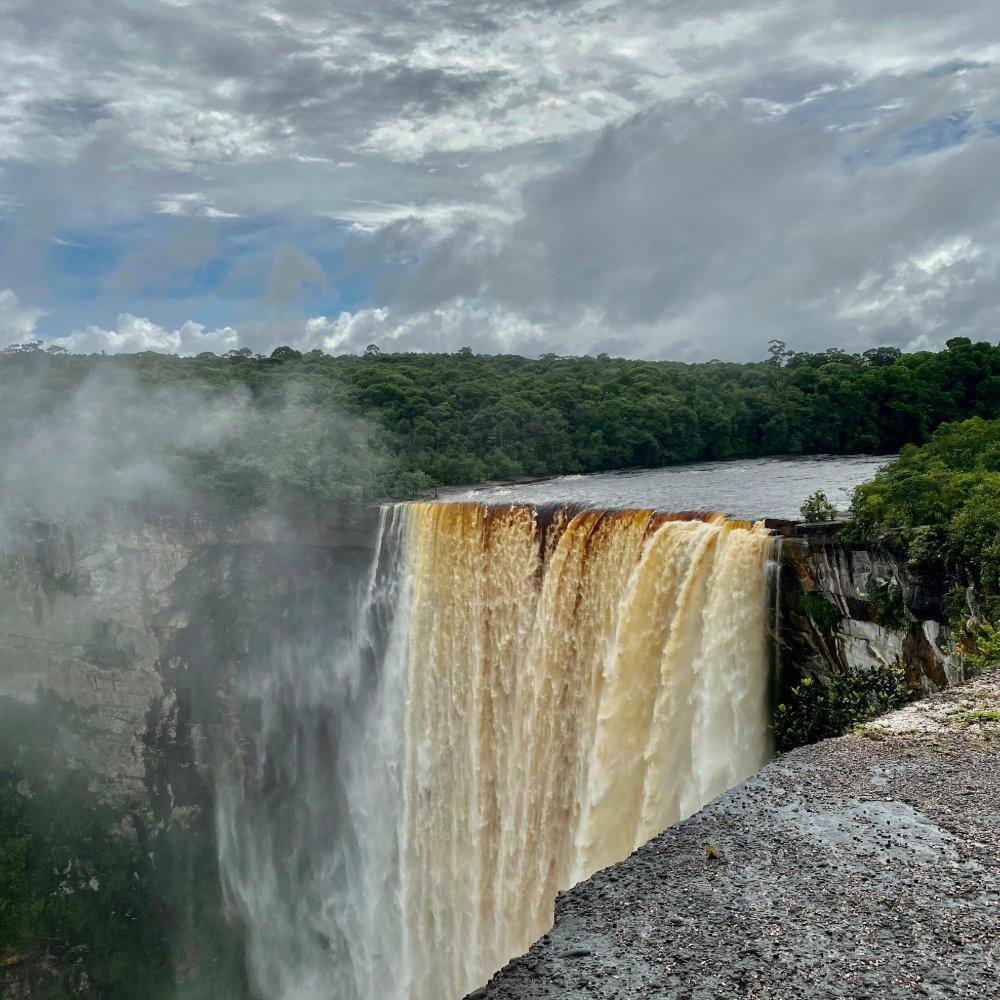
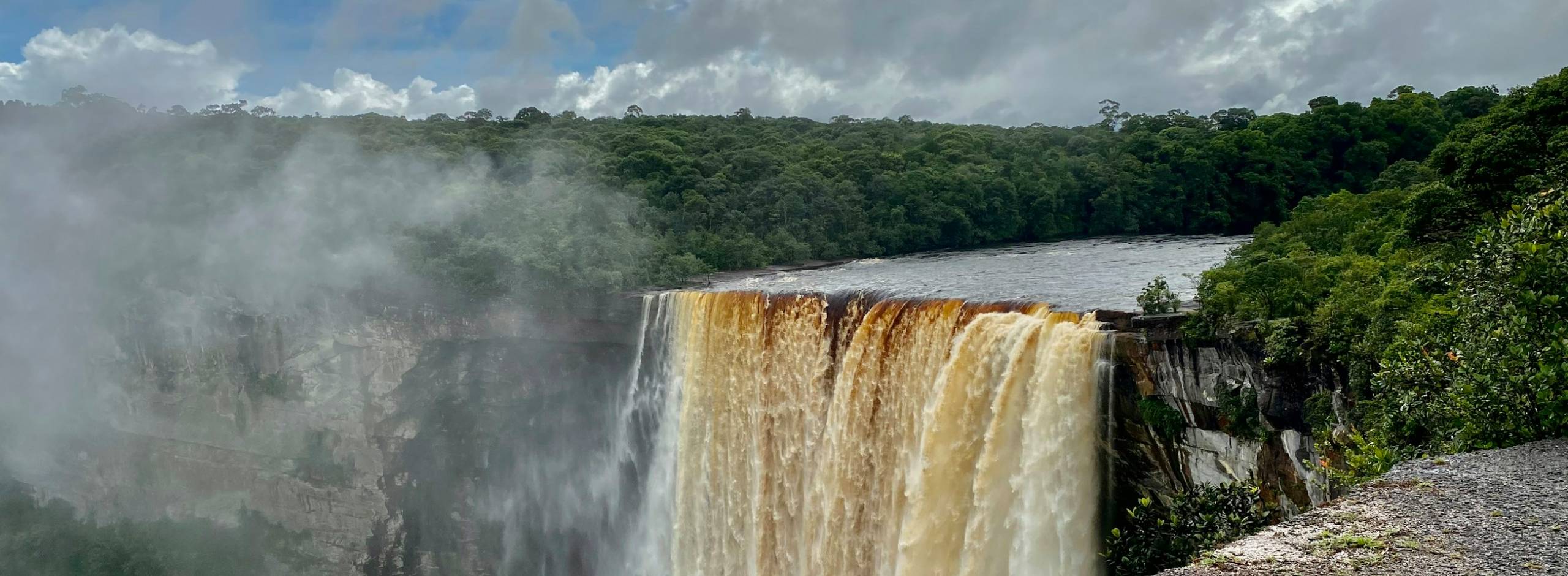
The headline sight is Kaieteur Falls, where the Potaro River drops 226 metres in a single plunge into a forested gorge. Beyond it, the Iwokrama Forest and the Rupununi savannahs are home to jaguars, giant river otters, black caiman, harpy eagles and more than 900 bird species, explored from lodges run by or with Indigenous communities.
The capital, Georgetown, blends Dutch-built canals and sea wall, white-painted colonial timber architecture and busy markets, reflecting the African, Indian, Indigenous, Chinese and European heritage that shapes Guyanese food, music and festivals such as Mashramani.
Top reasons to visit Guyana
Kaieteur Falls
Kaieteur Falls drops 226 metres in a single plunge, framed by untouched rainforest in Kaieteur National Park. Most visitors fly in on a light aircraft from Georgetown, often combining it with nearby Orinduik Falls on the Brazilian border.
The Iwokrama Forest
Iwokrama protects a million acres of rainforest in the heart of the country. Stay at the river lodge, walk the canopy walkway at dawn and watch for jaguars along the Georgetown to Lethem road that cuts through the reserve.
The Rupununi savannahs
In the south-west, wide grasslands, wetlands and mountains host cattle ranches and Indigenous villages. Karanambu is known for giant river otters, Caiman House for black caiman research, and the Rupununi Rodeo brings vaqueros together each Easter.
Community-run eco-lodges
Lodges such as Surama and Rewa are owned and run by Makushi communities, offering guided forest walks, river trips and village visits. Rewa is a base for catch-and-release fishing for arapaima, one of the world's largest freshwater fish.
Georgetown
The capital's highlights include St George's Cathedral, one of the tallest wooden churches in the world, the iron-framed Stabroek Market, the Promenade Gardens and the Botanical Gardens, where manatees live in the ponds.
Shell Beach and the coast
On the north-west coast, Shell Beach is a protected nesting site for marine turtles, including leatherbacks and green turtles, during the nesting season.