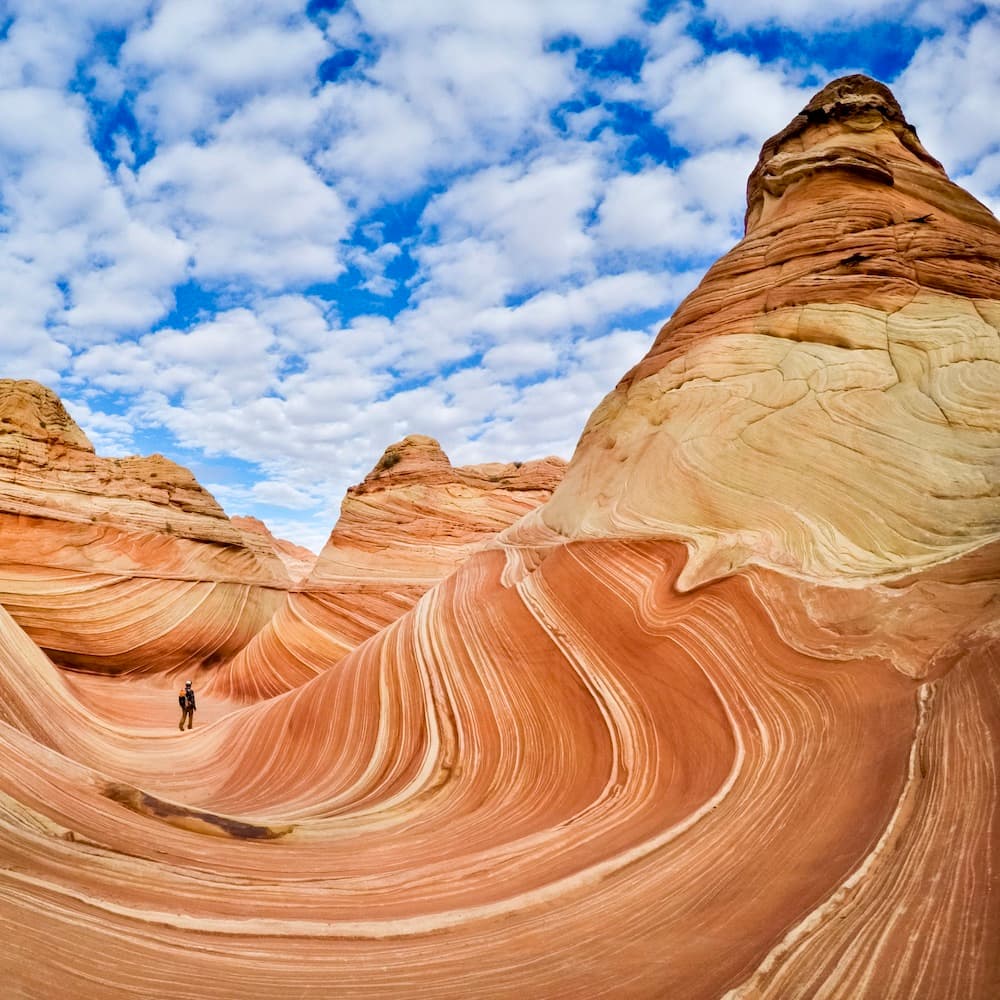
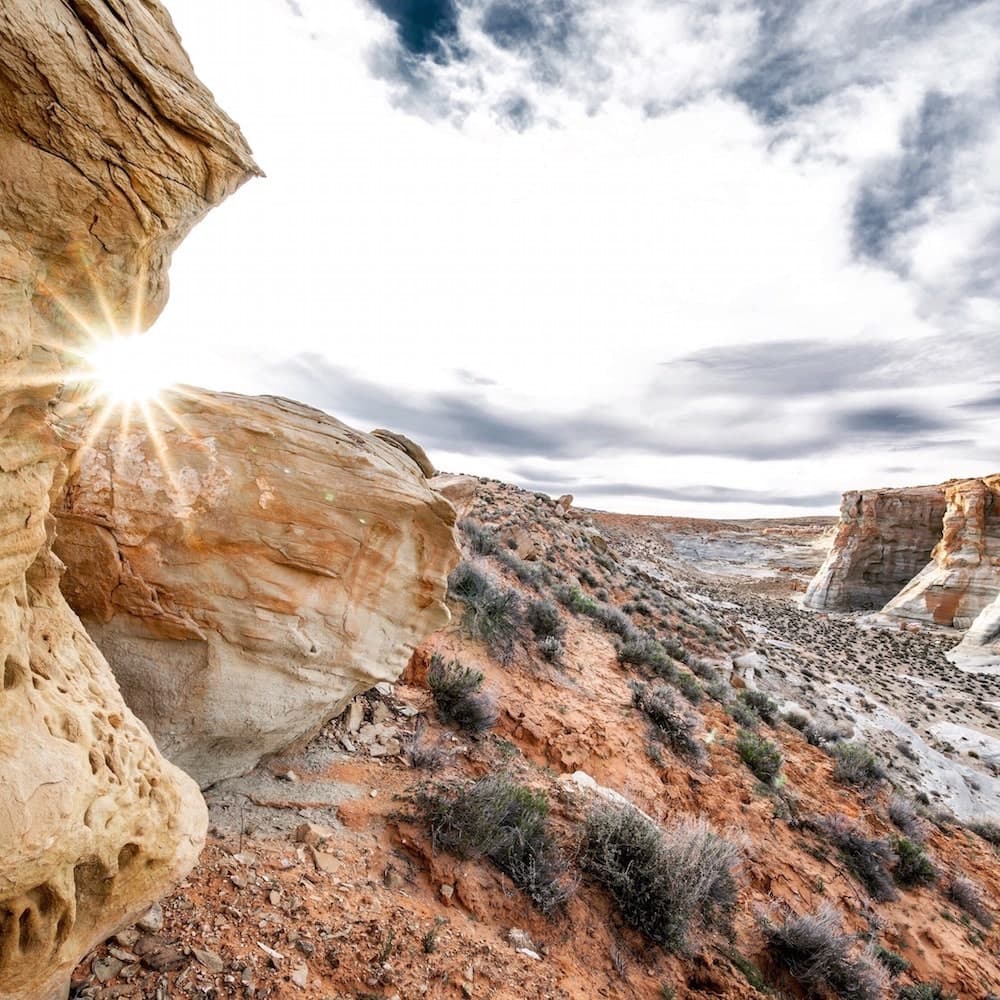
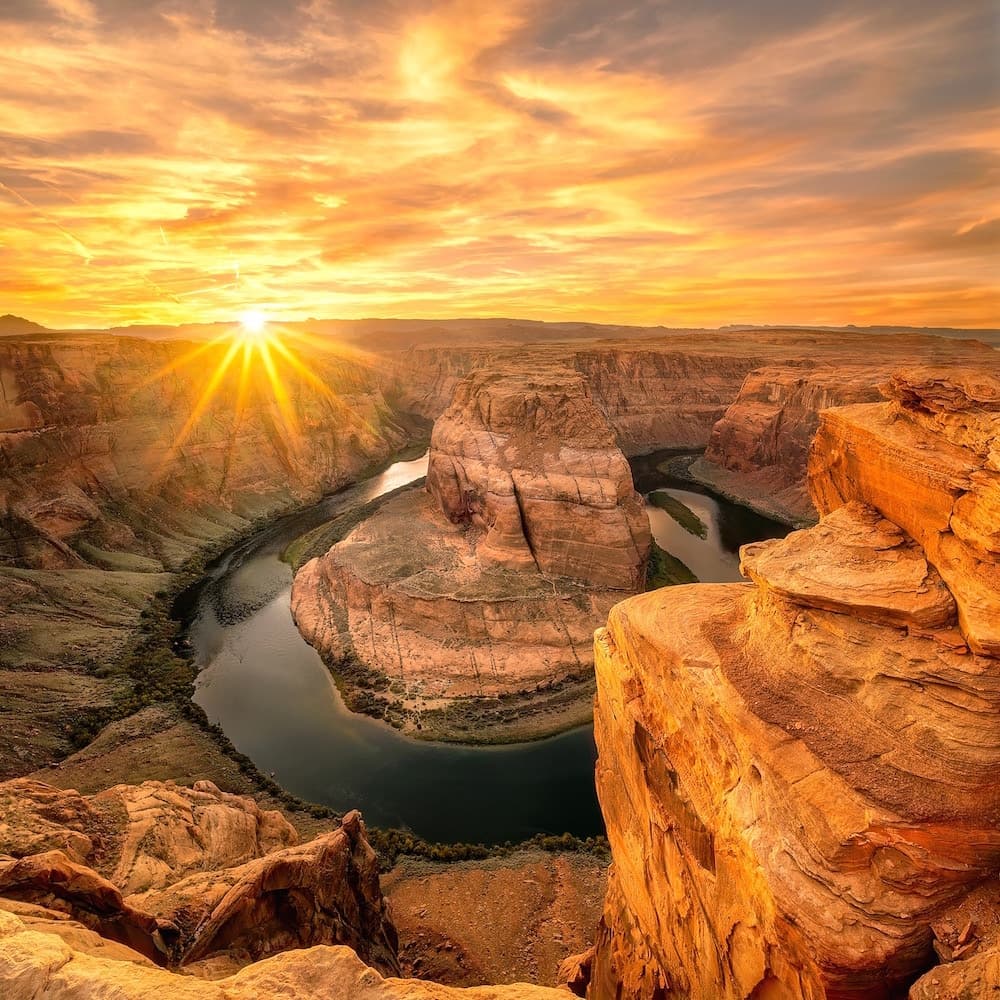
In spring, White Pocket transforms into a vibrant landscape, blossoming with mild temperatures and clear skies. This is an ideal time for photography enthusiasts, as the unique rock formations and swirling patterns of the sandstone are accentuated by the soft spring light. Wildflowers may begin to dot the landscape, providing a colorful contrast to the predominantly red and orange hues of the rocks. The milder weather makes hiking and exploring more comfortable, but visitors should be prepared for occasional spring showers that can make the dirt roads leading to White Pocket challenging to navigate.
Summer at White Pocket is characterized by intense heat and dramatic monsoon skies. The temperatures can soar, making early morning or late evening the best times for exploration. The harsh sunlight at this time of year can create stark shadows and highlight the intricate details of the rock formations. Summer also brings the chance of monsoon rains, which can temporarily cool the area and offer a unique opportunity to see the desert landscape revitalized. However, these rains can also make the roads more treacherous, and flash floods are a possibility.
Autumn in White Pocket sees a return to cooler temperatures, making it a favorite time for many visitors. The changing light brings new perspectives to the rock formations, with softer shadows and a golden hue that enhances the natural beauty of the area. This season is generally drier, offering more reliable access via the dirt roads. The cooler weather is perfect for longer hikes and extended photo sessions, allowing visitors to fully immerse themselves in the surreal and otherworldly beauty of White Pocket without the extreme temperatures of summer.
Winter at White Pocket offers a serene and peaceful experience, with fewer visitors and a chance to see the rock formations dusted with snow. The contrast of the white snow against the red rocks is a rare and breathtaking sight. The temperatures can be cold, and occasional snowfall might make access more challenging, but the unique winter scenery is a reward for those willing to brave the elements. The low angle of the winter sun creates long shadows and highlights the textures of the rocks, making it an excellent time for photography.