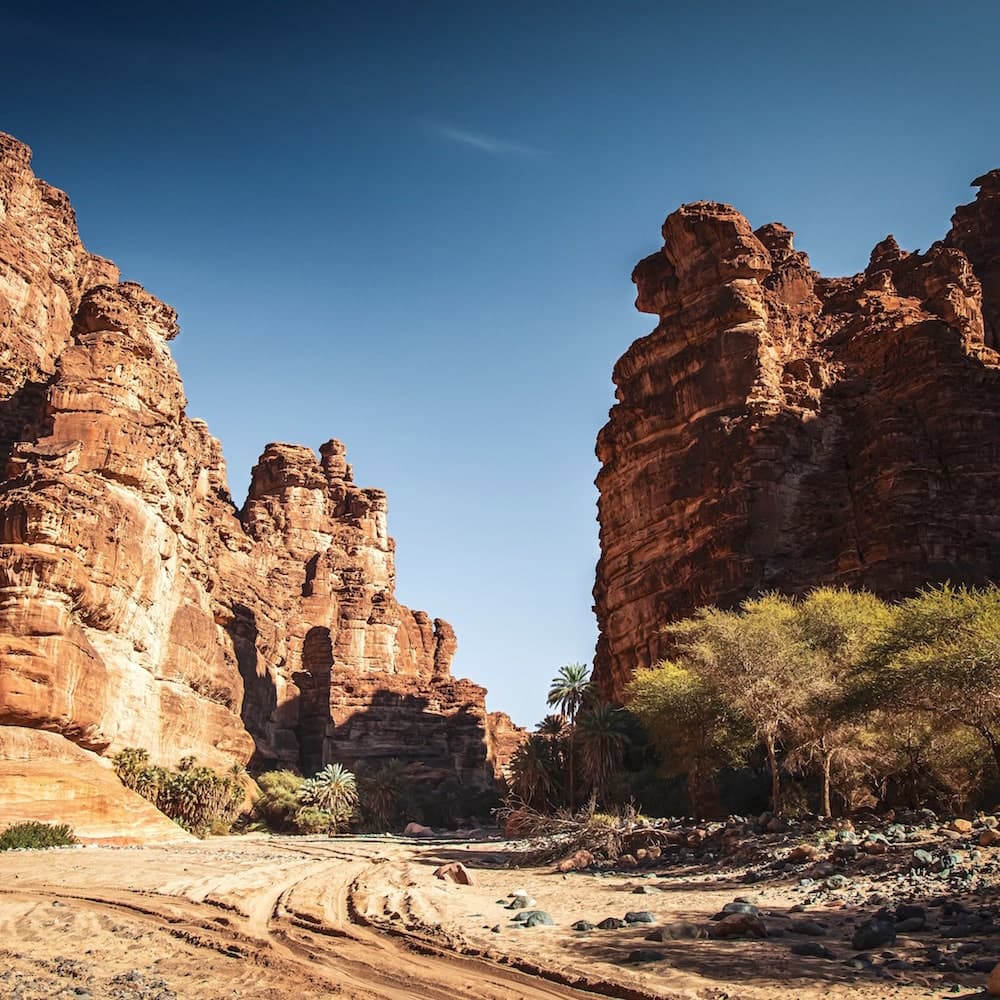
In spring, Tabuk transforms into a surprising oasis of mild weather and blooming landscapes. This season, typically stretching from March to May, is ideal for outdoor enthusiasts. Visitors can explore the flourishing Al Disah Valley, where the contrast of lush greenery against the stark desert backdrop is at its most striking. The moderate temperatures are perfect for trekking through Tabuk's historic sites, such as the ancient Hejaz Railway station and the hauntingly beautiful Magha’er Shuaib. Spring in Tabuk is also a time for cultural festivals, where one can immerse in the rich Saudi heritage and savor local delicacies under a temperate sky.
Summer in Tabuk, spanning from June to August, is a season of intense heat and clear skies. This is the time when the city's desert landscape truly reveals its harsh beauty. While outdoor activities may be limited during the day due to high temperatures, the evenings offer a respite, ideal for night-time desert safaris and stargazing. The Red Sea beaches near Tabuk, such as Bir Al-Mashi and Sharma Beach, become popular getaways, offering water sports and cooler coastal air. Visitors can also explore the air-conditioned museums and malls of Tabuk city, delving into the region's history and modern development.
Autumn, from September to November, is a season of transition and pleasant weather in Tabuk. The scorching heat of summer gives way to cooler, more comfortable days, making it a perfect time for exploring the great outdoors. This is an ideal period for visiting the archaeological wonder of Tabuk Castle or hiking around Jebel Al-Lawz, known as the "Almond Mountain". The cooler evenings are perfect for sampling traditional Saudi cuisine at local eateries or enjoying a tranquil sunset over the Red Sea. Autumn also marks the date harvest season in Tabuk, offering visitors a unique opportunity to witness and participate in this important local harvest.
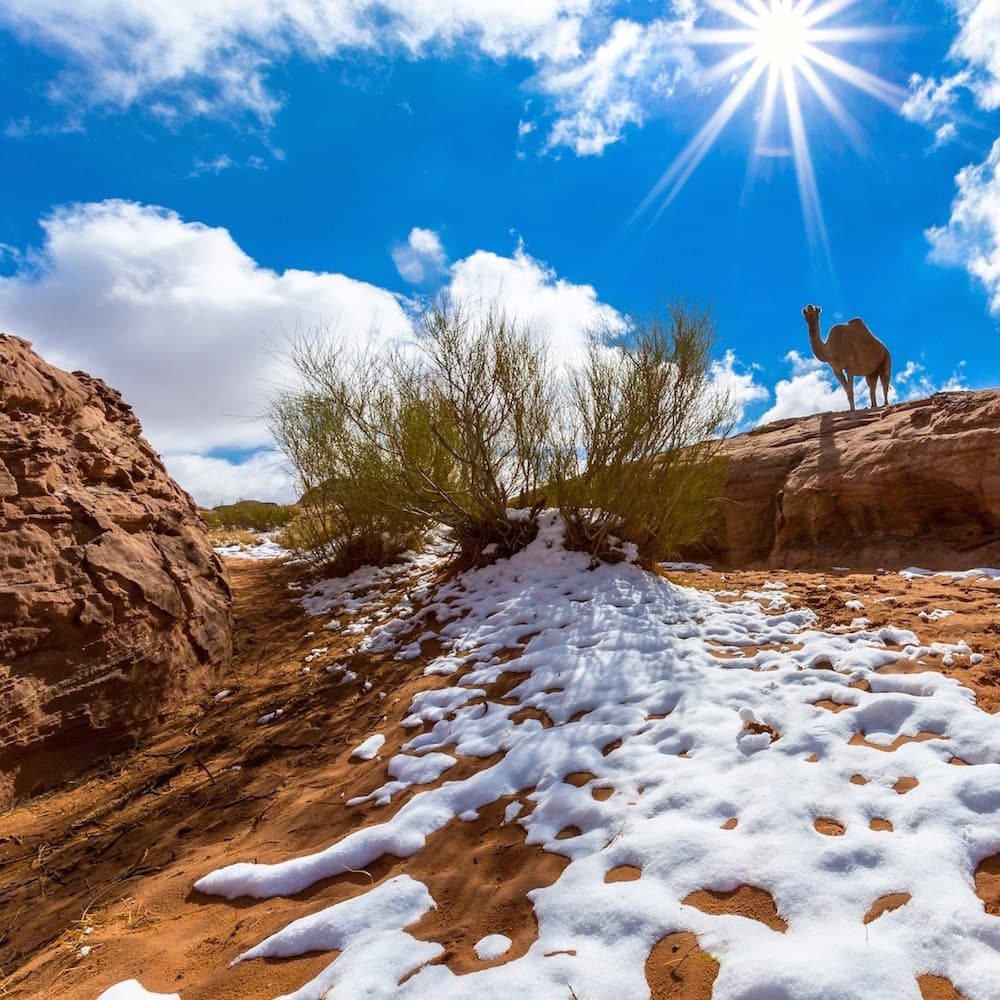
Winter in Tabuk, from December to February, is a season of stark beauty and unique experiences. The region is known for its occasional snowfall, which blankets the desert and mountains in a rare and stunning white coat. This is the best time for adventure seekers to explore the snow-capped peaks of Jebel Al-Lawz or witness the seasonal transformation of the desert. Cultural experiences abound, with winter festivals showcasing Bedouin traditions and crafts. The cooler weather is also conducive to visiting historical sites like the Ottoman-era Tabuk Fortress, offering a glimpse into the region's storied past without the intense heat of summer.