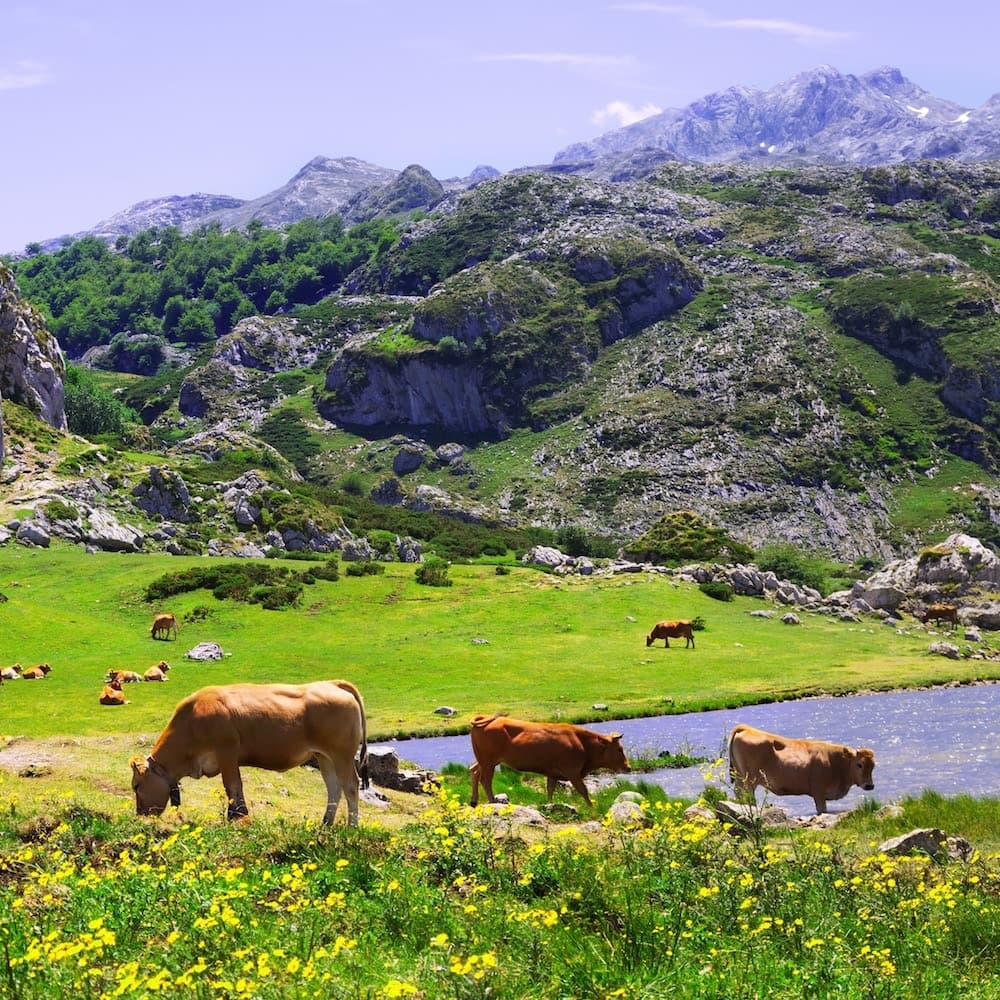
Spring in Picos de Europa National Park is a time of enchanting transformation. As the snow recedes, revealing the contours of the landscape, the park begins to burst into life. Streams swell with fresh meltwater, creating a dynamic backdrop for hikers and nature photographers. The temperatures are mild, ideal for exploring the blooming valleys and the awakening wildlife. Bird enthusiasts will find this season particularly rewarding as the park becomes a symphony of bird songs. The lower altitudes are perfect for leisurely walks among the wildflowers, while the higher paths offer breathtaking views of the still snow-dusted peaks. It's a season of renewal, offering visitors a unique blend of serenity and natural beauty.
Summer in Picos de Europa brings longer days and warmer weather, perfect for adventurous activities. The park's high peaks, such as Naranjo de Bulnes, become prime spots for climbers seeking thrilling ascents. Trekking routes, like the famous Cares Trail, offer breathtaking views and challenging terrain for hikers. The warmer temperatures also make it an excellent time for kayaking or canoeing in the park's rivers and lakes. Additionally, the local villages come alive with cultural festivals, offering visitors a taste of traditional Asturian music, dance, and cuisine. The clear skies at night provide a spectacular backdrop for stargazing.
Autumn paints Picos de Europa in a palette of oranges, reds, and yellows, creating a photogenic landscape. This season is quieter, offering a peaceful retreat for those seeking solace in nature. The cooler temperatures are ideal for comfortable hiking and exploring the park's diverse wildlife, including the chance to spot deer and chamois. It's also a time of harvest, and local markets brim with seasonal produce like apples, chestnuts, and artisan cheeses. Autumn is a magical time for photographers and artists, capturing the dramatic change of seasons against the backdrop of the majestic mountains.
Winter in Picos de Europa is a snowy wonderland, attracting skiers and snowboarders to its slopes. The park's higher altitudes are blanketed in snow, offering picturesque scenery and a variety of winter sports opportunities. For those preferring a slower pace, snowshoeing and cross-country skiing are popular activities, allowing visitors to traverse the serene, snow-covered landscapes. It's also a time to experience the park's quietude, with fewer tourists and a more intimate connection with nature. The local hospitality is warm and welcoming, with cozy accommodations offering traditional Asturian comfort food by the fireplace.