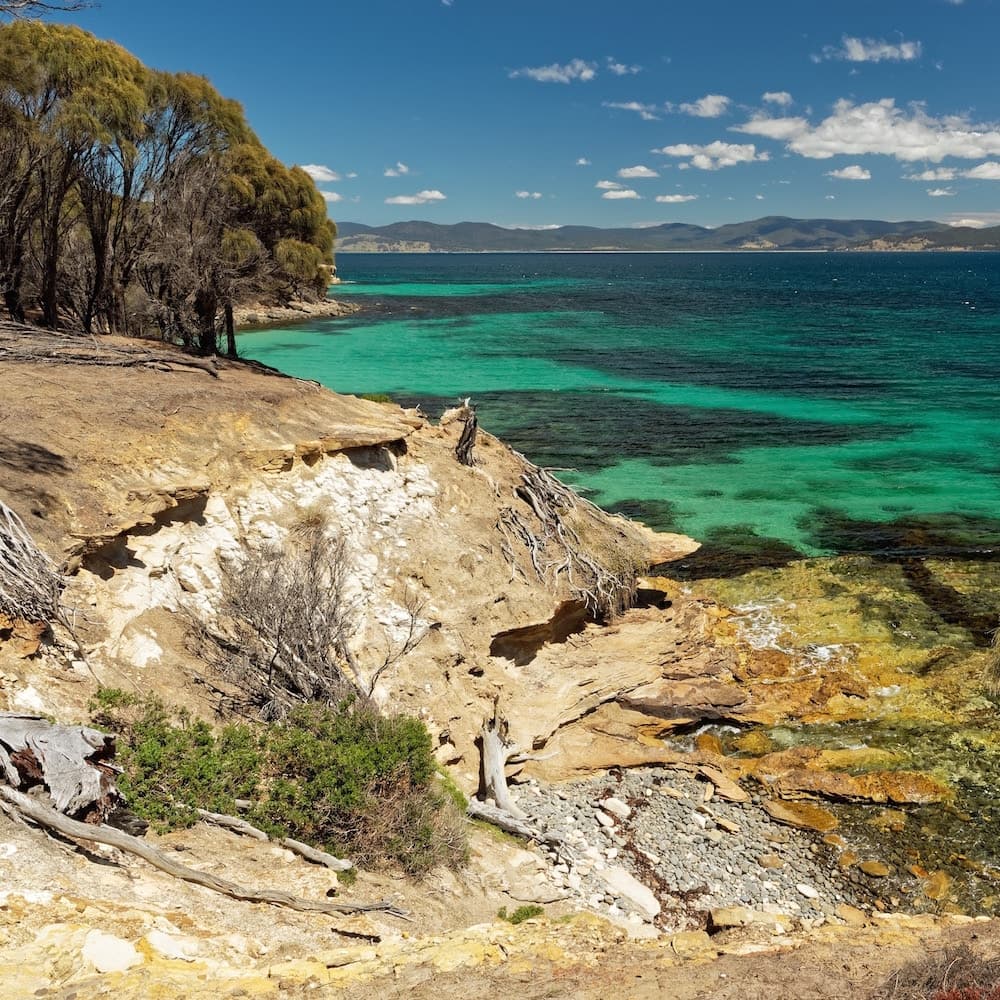
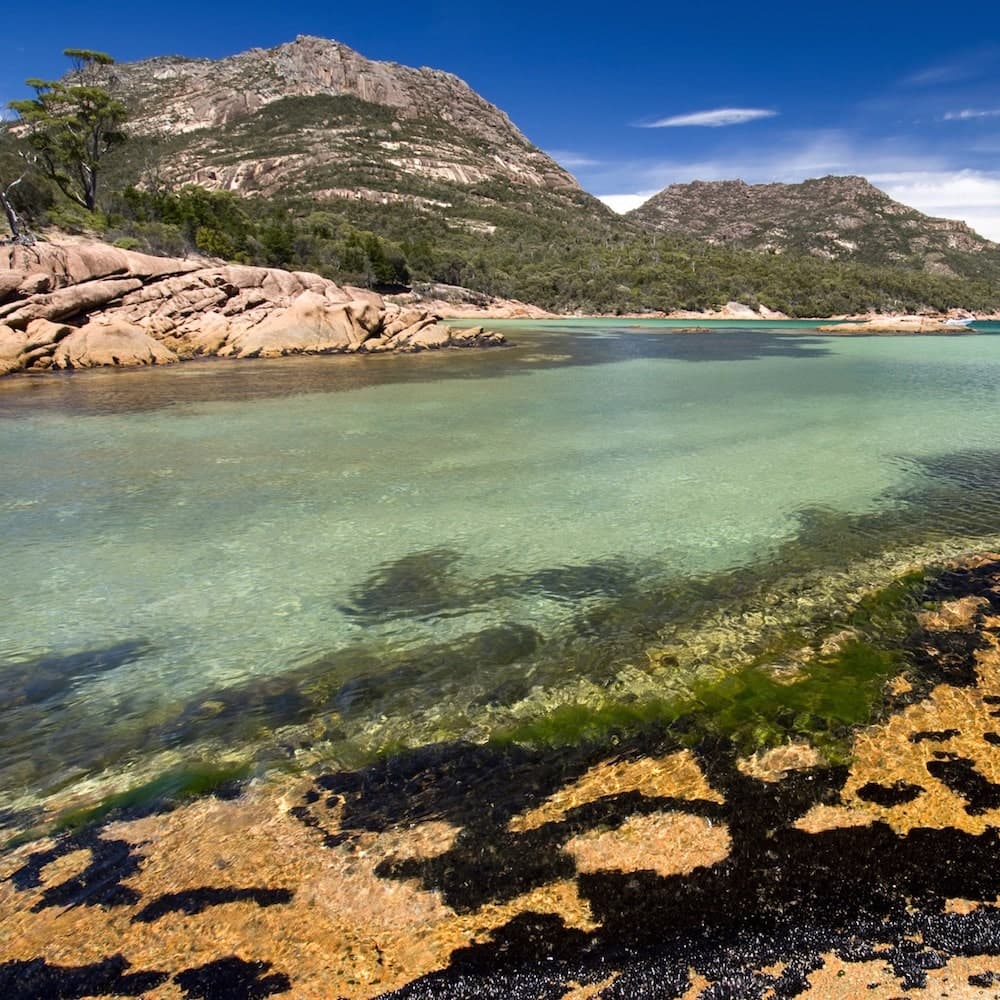
As the chill of winter gives way to milder temperatures, Painted Cliffs in Tasmania bursts into life. New flora emerge, and native wildlife becomes increasingly active, providing an added bonus to the natural spectacle of the cliffs. The more temperate climate encourages outdoor exploration, and the softer spring light makes the sandstone formations especially photogenic. While showers are not uncommon during this period, they are generally short-lived, allowing for a variety of outdoor activities.
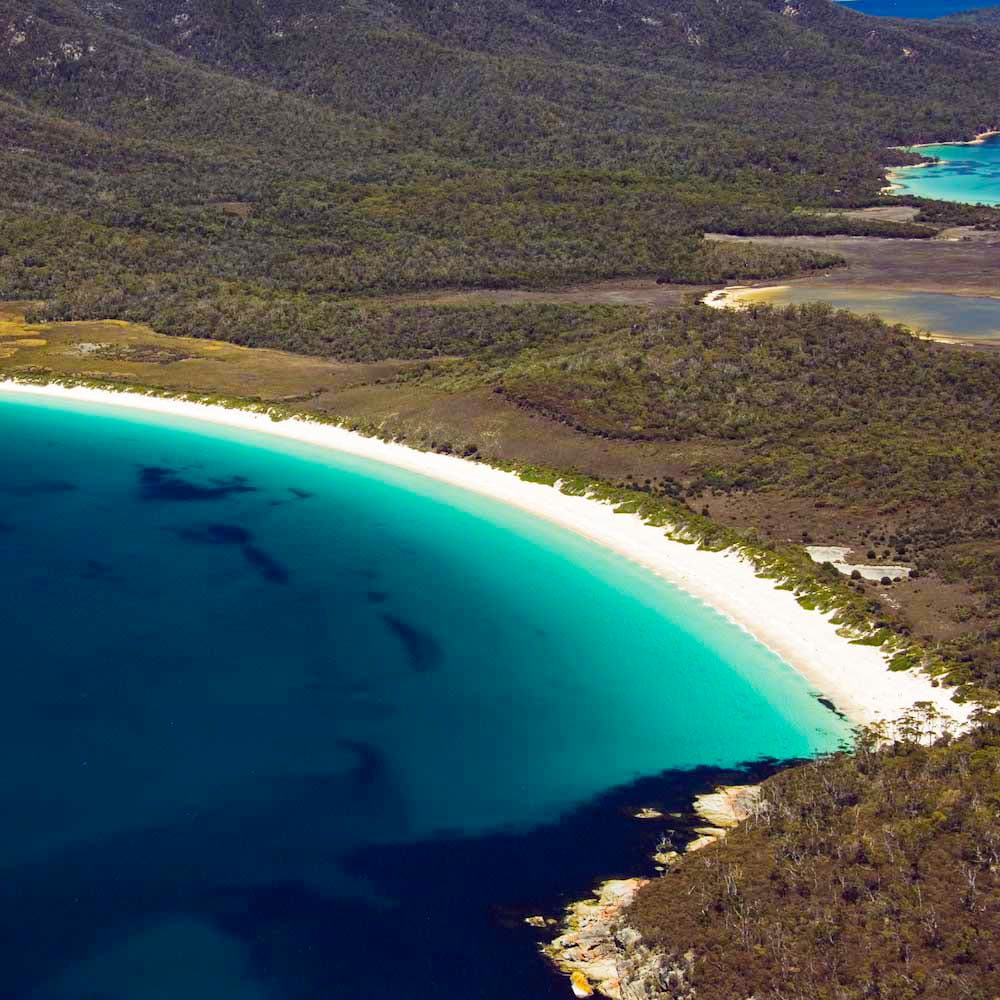
Bright, sunny days dominate the landscape, making the colors of the Painted Cliffs stand out vividly against the azure sky. The inviting warmth makes it an ideal time for beach activities, whether you're interested in sunbathing or taking a refreshing swim in the ocean. Because this is a popular time for tourists, early morning or late afternoon visits offer a more peaceful experience. Heat can be intense, so come prepared with sunscreen, a hat, and plenty of hydration.
As the summer crowds thin out, a sense of calm envelops the area. The cliff formations take on richer hues, and the skies at dawn and dusk offer a kaleidoscope of colors that photographers find irresistible. Mild temperatures make it comfortable to hike and explore, but do come prepared for the occasional rain shower. The more temperate climate and changing foliage make autumn a season that combines the best of natural beauty and serenity.
Cold temperatures and dramatic skies offer a striking contrast to the beauty of the Painted Cliffs. The fewer number of visitors allows for a solitary, contemplative experience, allowing you to truly appreciate the geological wonders before you. Winter storms bring powerful tides that further sculpt the cliffs, providing a dynamic backdrop that is both awe-inspiring and humbling. Sturdy footwear and layered clothing are recommended, as the weather can be unpredictable and trails slippery.