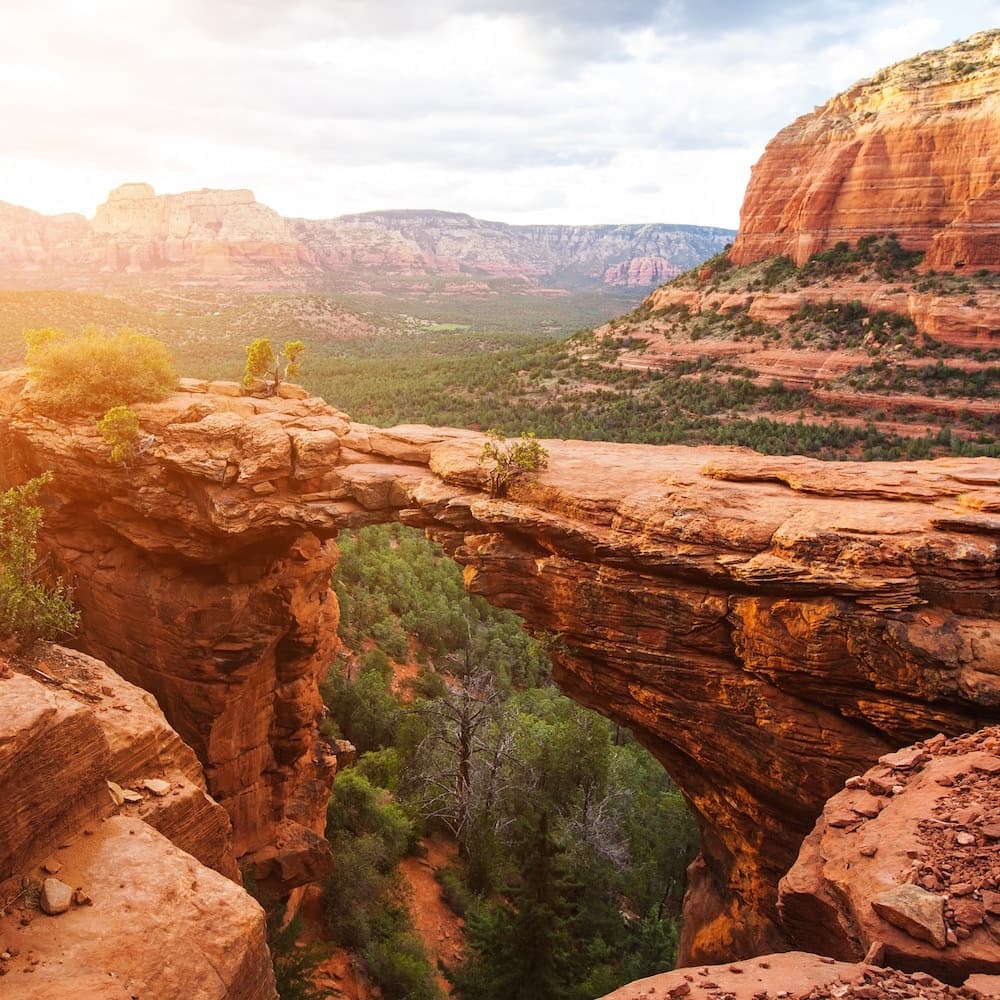
In spring, Coconino National Forest awakens with vibrant life. As the snow melts, the forest's diverse landscape, ranging from desert valleys to alpine tundra, becomes a canvas of blooming wildflowers and budding trees. The weather is mild, perfect for hiking and exploring the forest's iconic sites like the Red Rocks of Sedona. Birdwatchers will be delighted by the return of migratory birds. However, visitors should be prepared for occasional rain showers and cooler temperatures at higher elevations.
Summer in Coconino National Forest is a season of sunny skies and warmer temperatures, attracting outdoor enthusiasts. The forest's high elevation offers a cooler alternative to Arizona's intense summer heat, making it ideal for camping, mountain biking, and hiking. The lush greenery and flowing streams create a picturesque setting for nature photography. It's important for visitors to stay hydrated, wear sun protection, and be aware of monsoon season in late summer, which can bring sudden thunderstorms.
Autumn transforms Coconino National Forest into a spectacular display of fall colors. The aspen groves turn golden, contrasting beautifully with the evergreens. The temperatures are cool and pleasant, perfect for scenic drives, especially through the San Francisco Peaks. This season is also a great time for wildlife spotting, as animals prepare for winter. Visitors should note that some high-elevation areas might receive early snowfall, and daylight hours are shorter.
Winter in Coconino National Forest is a wonderland of snow-covered landscapes. The forest becomes a prime destination for winter sports like skiing and snowshoeing, particularly at the Arizona Snowbowl. The serene beauty of the snow-laden trees and quiet trails offers a peaceful retreat. Visitors should be prepared for cold temperatures and ensure they have appropriate winter gear. While some areas may be inaccessible due to snow, the winter scenery in accessible areas is breathtaking.