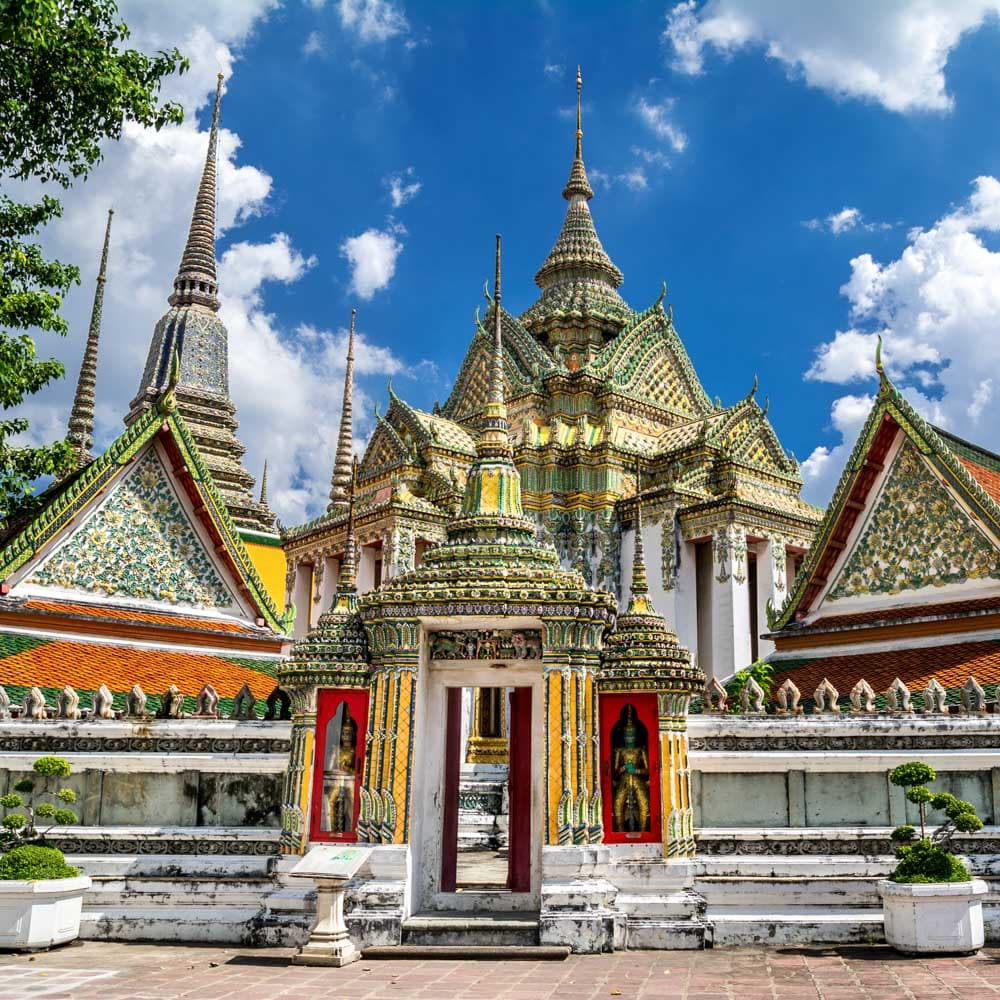
Spring in Bangkok falls between February and April and is known for its warm, but not yet stifling, temperatures. This season is an opportune time to visit Wat Arun, or the Temple of Dawn, as the comfortable weather complements the serene beauty of this iconic landmark. The gardens around the temple are in bloom, accentuating the already striking design of the temple with bursts of floral colors. Being that it's just before the main tourist season, you'll find that the temple complex is relatively less crowded, allowing for a more peaceful exploration. The soft sunlight of spring mornings enhances the iridescent porcelain that adorns the temple's spires, making for excellent photography opportunities.
Summer in Bangkok, extending from May to October, is characterized by hot temperatures and high humidity. This is also the season of the monsoons, so expect intermittent rain showers. Despite the heat, Wat Arun remains an enchanting place to visit. Many tourists opt to visit in the early morning or late afternoon to avoid the midday sun, as the temple complex offers little shade. The temple is illuminated at night, and the reflection of its intricately designed towers in the adjacent Chao Phraya River offers a breathtaking view that is especially magical during the warm summer nights.
November marks the beginning of autumn in Bangkok, a season that lasts through January. During these months, the weather is relatively cooler and less humid, making it an ideal time to explore Wat Arun. Autumn evenings are particularly wonderful for catching the sunset behind the temple, painting the sky in hues of orange and purple as the intricate silhouette of Wat Arun stands majestically against the skyline. River cruises are popular during this season, and they offer another vantage point from which to admire the temple’s architectural grandeur. Vendors selling lotus flowers and incense line the pathway to the temple, lending a fragrant air to your autumn visit.
Winter in Bangkok is essentially an extension of the autumn months but is the peak tourist season. During December and January, you'll find Wat Arun bustling with visitors from around the world. The weather is cooler compared to other seasons, and there's less rainfall, making it a pleasant time for outdoor exploration. The temple steps can be quite steep, but the cooler weather makes the climb less strenuous. On a clear winter's day, the view from the top offers a panoramic outlook of Bangkok and the winding Chao Phraya River that you'll find unforgettable. Winter is also when the temple hosts various religious ceremonies and events, providing an enriching cultural experience.