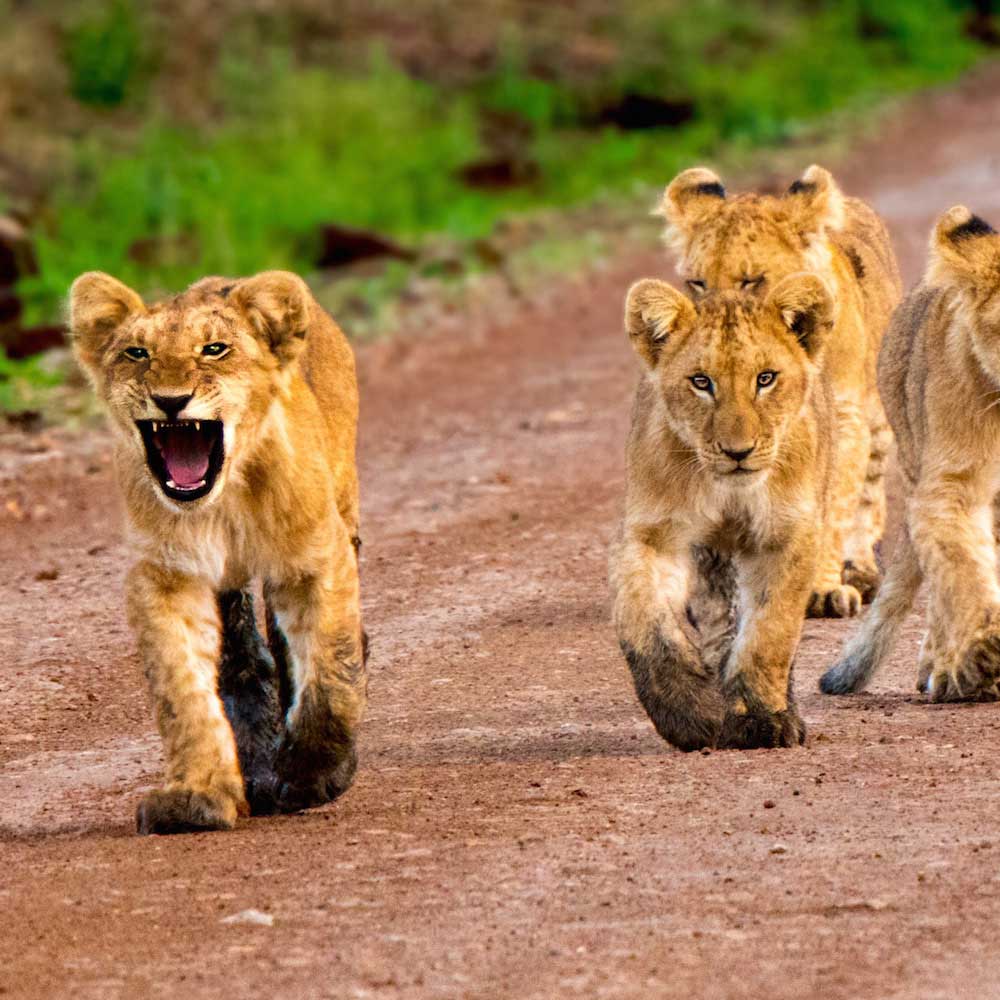
In spring, the Great Migration is in the early stages, with vast herds of wildebeest, zebras, and other grazers making their way from the Serengeti in Tanzania to the Maasai Mara in Kenya. This season is marked by the birth of thousands of calves, providing a unique opportunity for travelers to witness the beginning of new life in the wild. Predators like lions, cheetahs, and hyenas are also highly active, capitalizing on the vulnerability of the young. The landscape is lush and green from the recent rains, creating picturesque scenes for photography and wildlife observation.
Summer is peak season for the Great Migration in Kenya. By now, millions of animals have reached the Maasai Mara, and one of the most dramatic events occurs: the river crossings. Watching herds cross the crocodile-infested Mara River is both thrilling and intense. The plains are teeming with wildlife, and the sheer number of animals is astounding. With the dry season setting in, water sources become critical, making it easier to predict where the action will be. This is an ideal time for travelers to experience the raw power and survival instincts of the African savannah.
In autumn, the migration starts its return journey to the Serengeti. The herds gather and begin to move south, creating a dynamic flow of animals through the Maasai Mara. This season offers a slightly less crowded experience compared to summer, but the wildlife sightings remain spectacular. Predators continue to follow the herds, offering numerous opportunities to witness hunting and other interactions. The weather is generally warm and dry, providing comfortable conditions for game drives and photography.
Winter in Kenya sees the tail end of the Great Migration. While fewer animals are present compared to the peak months, the landscape is serene and the game viewing is still rewarding. This quieter period allows for a more intimate safari experience, with less competition for prime viewing spots. The weather is cooler and dry, making for pleasant days in the bush. Travelers can still see large herds of resident wildlife and enjoy the tranquility of the Maasai Mara without the high-season crowds.